
Flair • Design Sprint • 2024
Expressing gender identity, one outfit at a time.
Overview
How might we create a safer, more affirming space for trans and non-binary people to explore personal style?
Flair was created during a 48-hour designathon focused on building for a more inclusive society. Our team designed a mobile fashion app for transgender and genderqueer users: a space to find inspiration, discover products, and document style in a way that feels affirming rather than alienating.
The project was personal. For many people in the queer community, fashion is not just aesthetic. It is part of identity formation, self-expression, and how someone moves through the world. That made the problem feel worth solving, even in a short sprint.
Problem
Mainstream fashion platforms are not built for this experience.
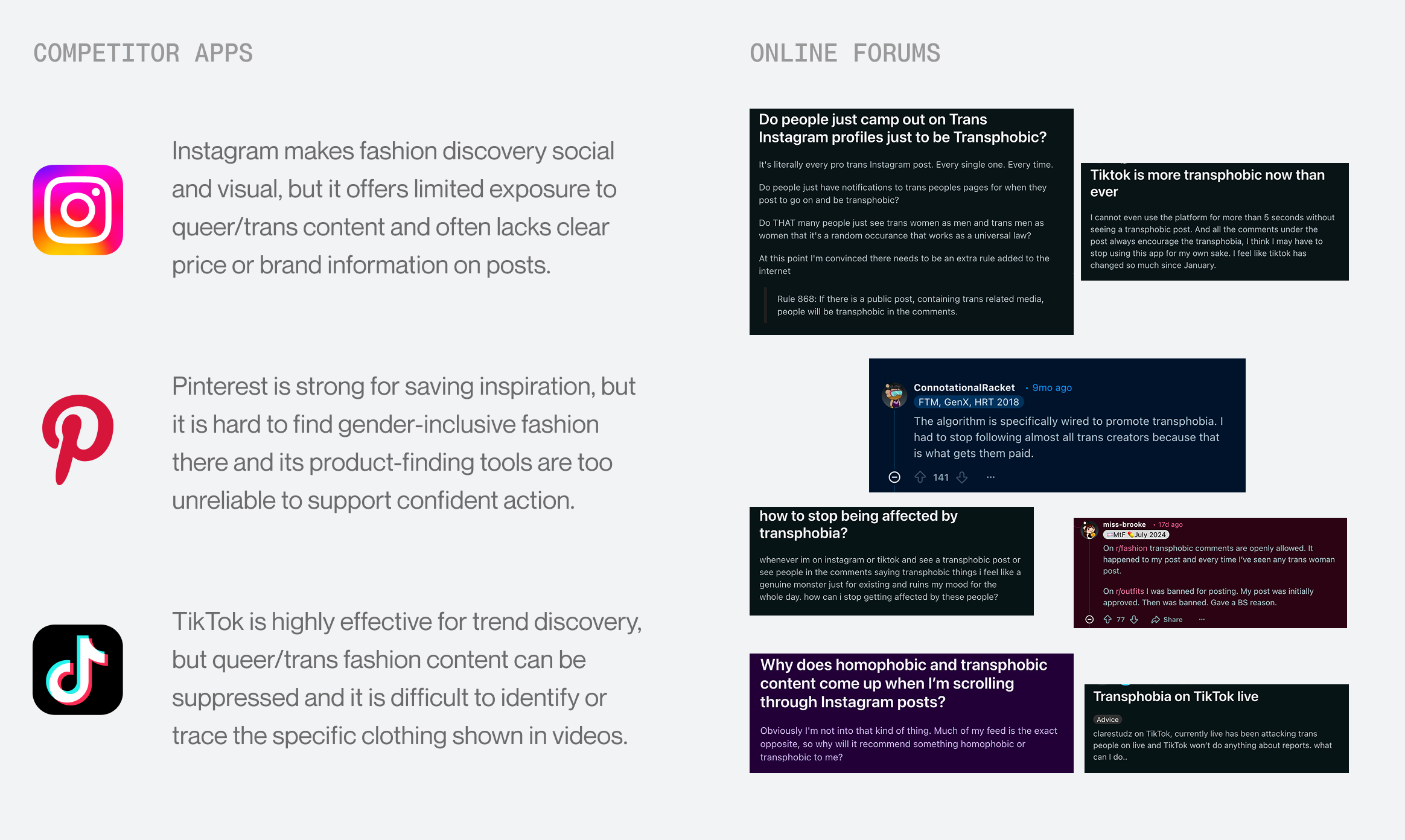
Platforms like Instagram offer inspiration at scale, but they optimize for reach, not safety or relevance. For trans and non-binary users, that creates a frustrating gap. It can be hard to find styles that feel right, hard to find product details once something is discovered, and hard to avoid the hostility that often appears on mainstream social platforms.
That led us to a simple question:
How do we help users explore style and identity in a space that feels both useful and affirming?
Research
We used surveys and interviews to understand where existing fashion discovery breaks down.
To ground the concept, we gathered feedback through 45 surveys and 5 interviews with people across the queer gender spectrum.
People struggled to find affirming clothing.
Users described feeling boxed in by fashion that skewed too masc, too fem, or simply did not feel like them.
People lacked good starting points.
Exploring a new style can feel overwhelming when you do not know where to begin, what brands fit your goals, or what other people like you are wearing.
Mainstream platforms did not feel safe.
Users talked about disengaging from existing platforms because queer and trans fashion content is often not protected from transphobia or surfaced in thoughtful ways.
A secondary look at the market & online forums reinforced the same gap. Existing fashion platforms were good at content distribution, but weak at building an experience specifically for trans and genderqueer users.
Prototyping and Testing the experience
What feature should carry the value?
We explored multiple ways to make fashion discovery feel safe, actionable, and identity-affirming, here are select few of them:
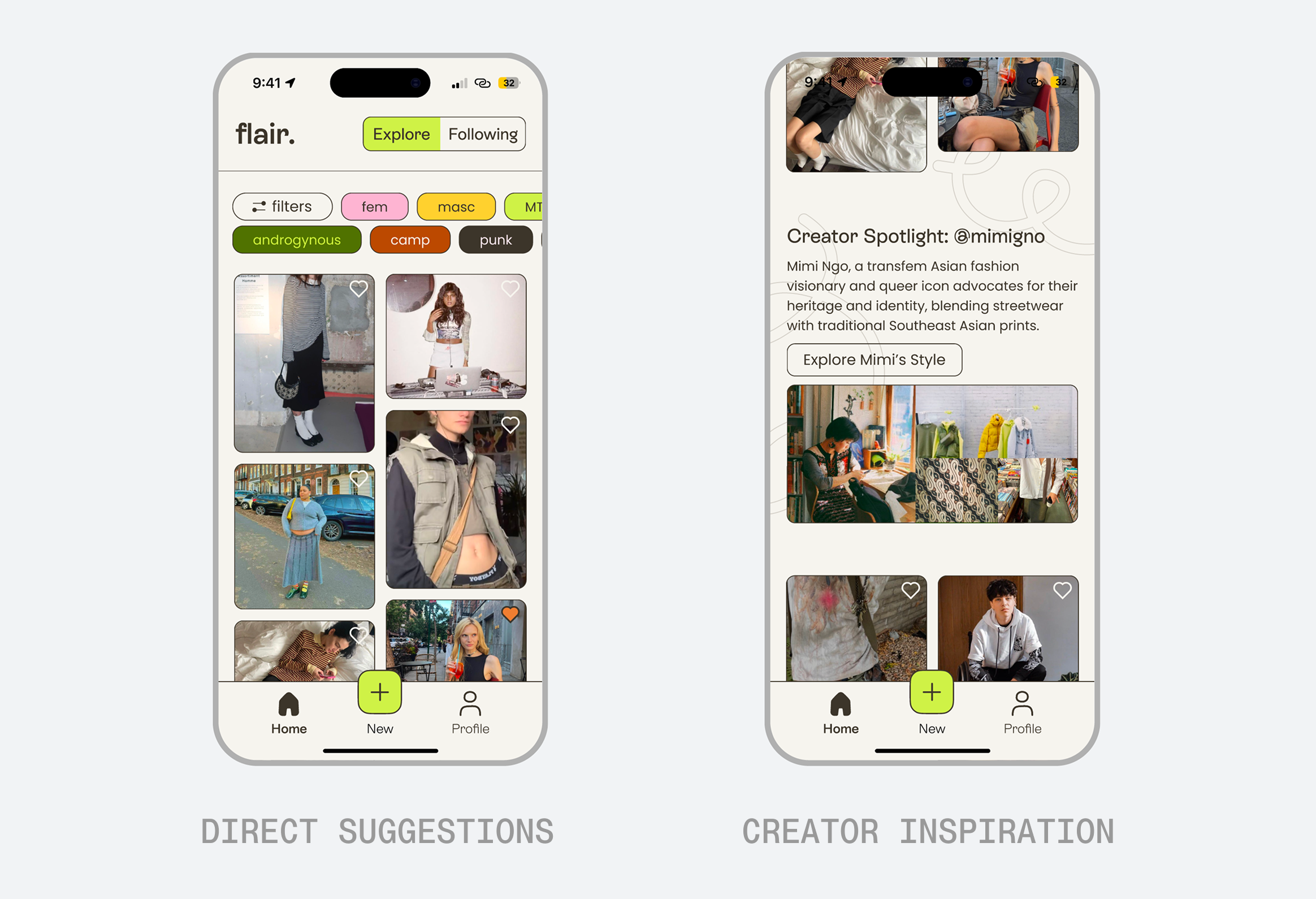
Inspiration-first feed
Mostly outfit content, mood, silhouettes, identity expression. Optimized for discovery and emotional resonance.
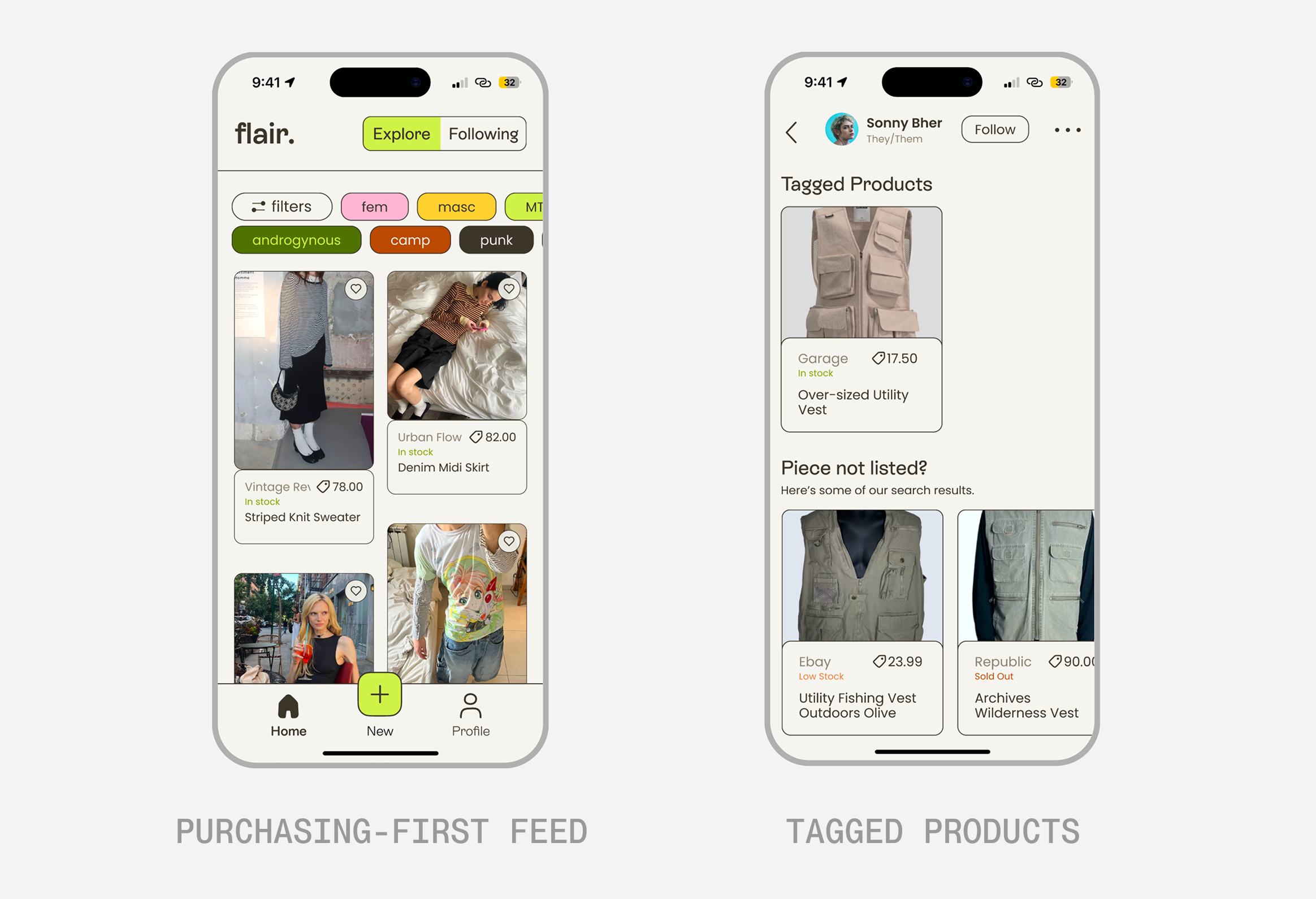
Shopping-first feed
Posts are tightly linked to products, pricing, brands, and availability. Optimized for action.
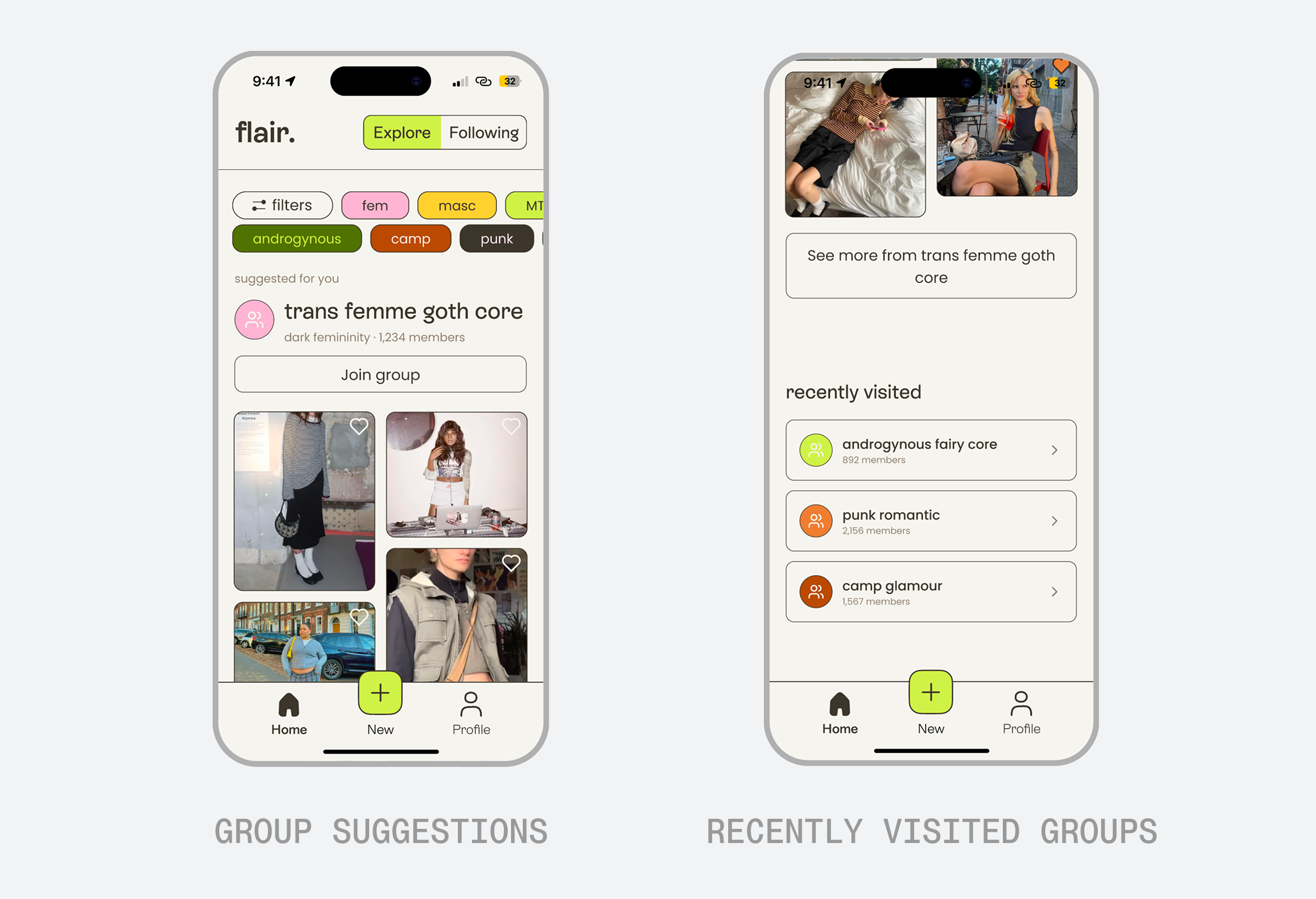
Community-first feed
Prioritizes people, stories, styling tips, and shared experience. Optimized for belonging and trust.
Testing and iterating with feedback!
We got users to try these prototypes, observed how they used them, how they felt, and got tons of valuable feedback.
Key User Insights
Discovery over shopping
People want to find new styles and more abstract fashion ideas, not necessarily specific pieces.
Remaining concerns about safety
Users are still skeptical of safety against discrimination and harassment. How can our system ensure there’s no bigotry?
Those insights clarified what the product should optimize for. Flair could not just be a shopping surface. It needed to prioritize discovery first, while also proving that a more affirming and protected experience was possible.
That naturally led us to the next design question: if users are still skeptical, what should the product itself do to earn trust?
Trust and Safety
What are some possible safeguards against bigotry?
We accepted that preventing all forms of bigotry was impossible. But, what can our platform itself do to at least mitigate as much transphobia and homophobia as possible? Here are a few solutions we ideated:
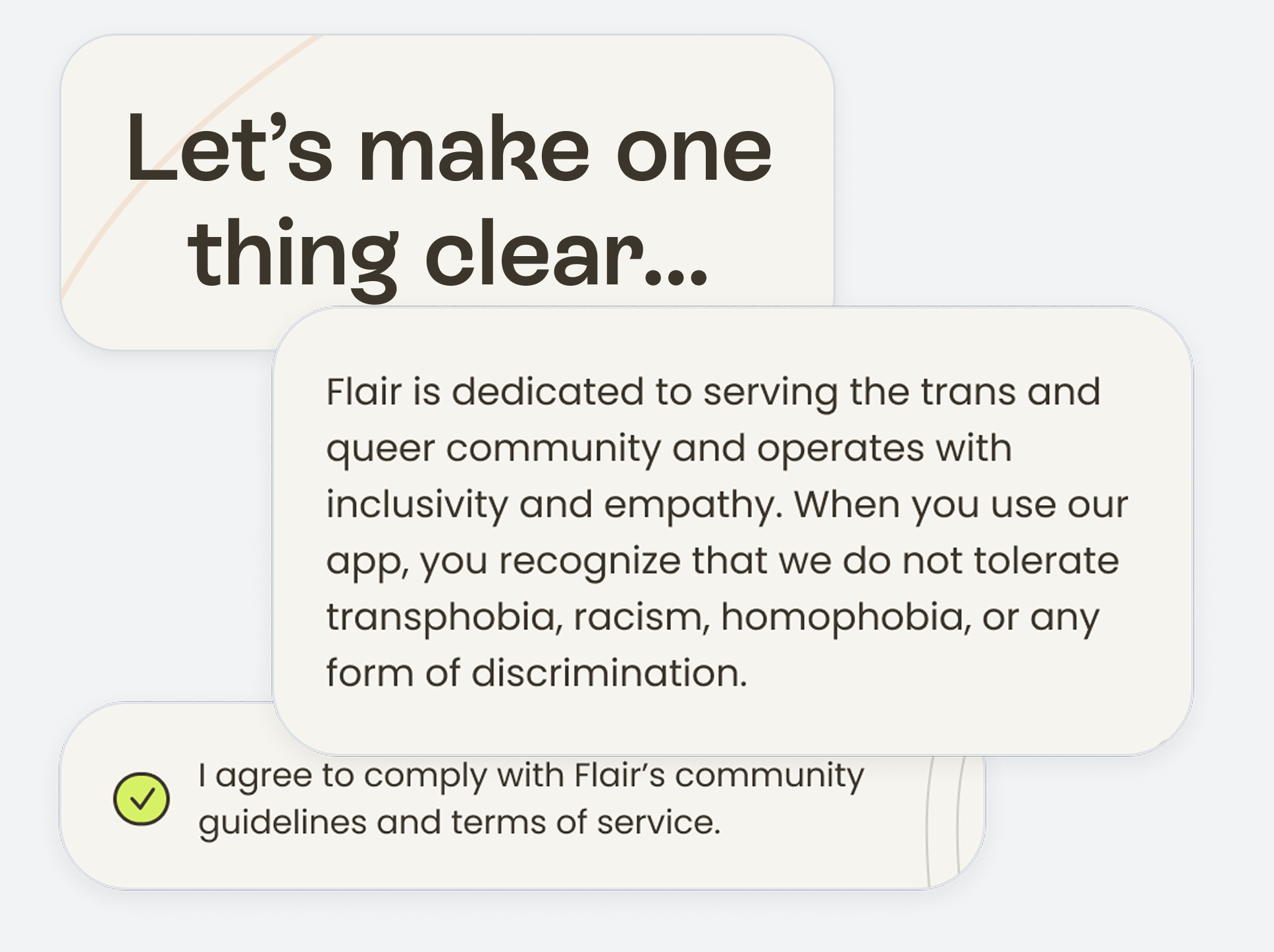
Onboarding agreement
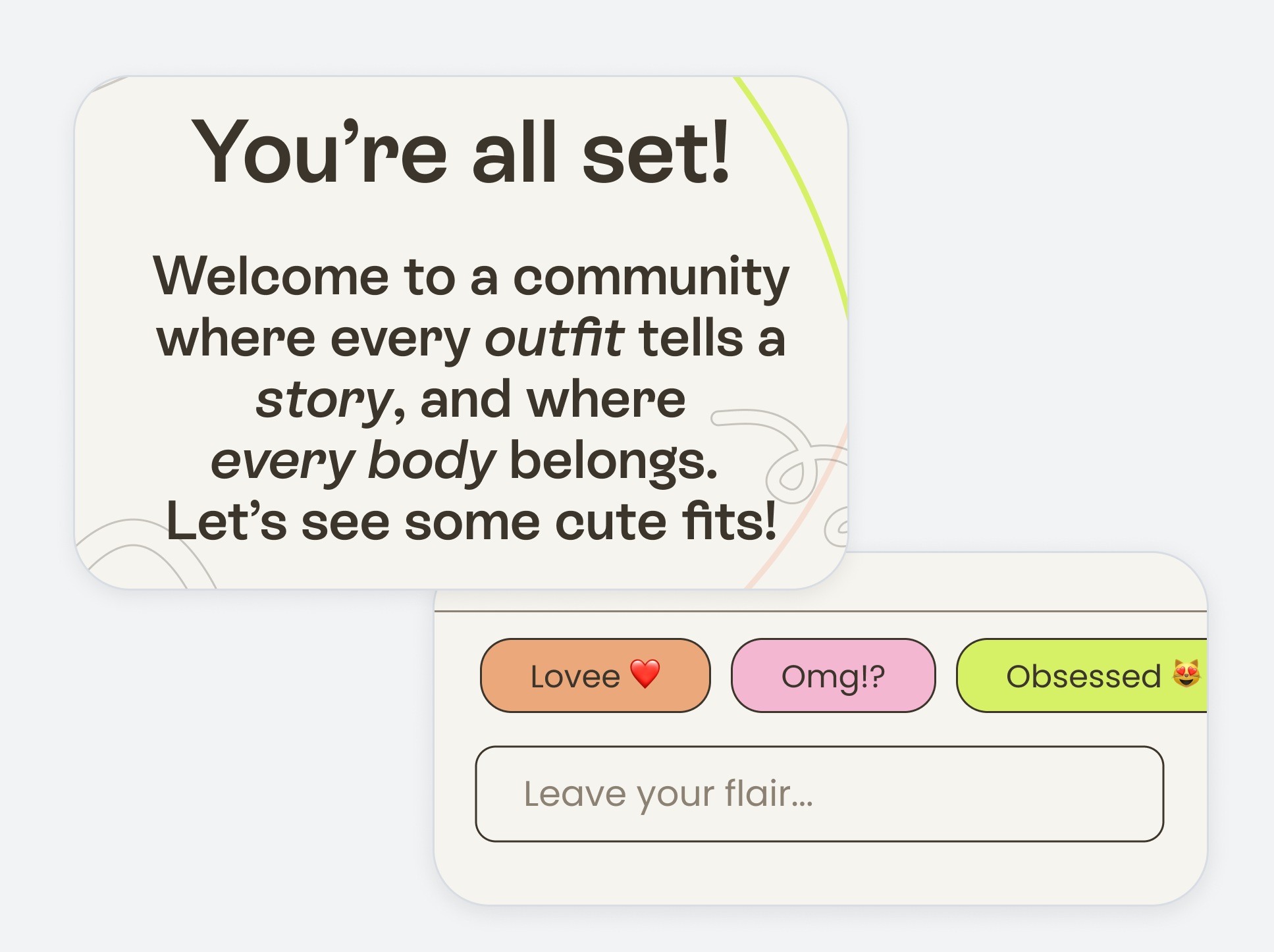
Encouraging positivity
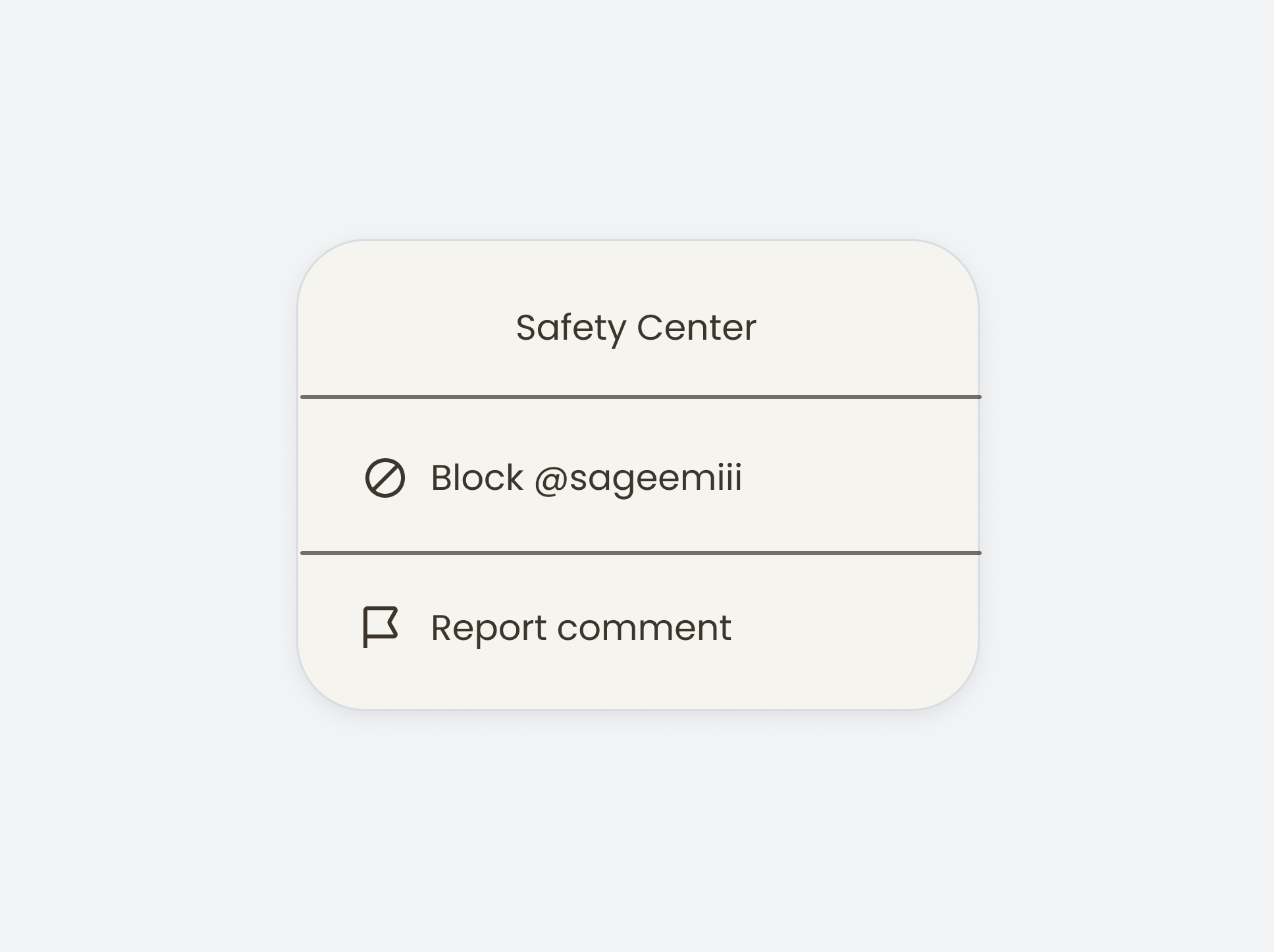
Blocking and reporting
Final Designs
We designed Flair as a lightweight fashion home for trans and genderqueer users.
Personalized onboarding
Users begin by sharing style preferences so the app can shape a more relevant and affirming starting point.
Discovery feed
The home screen surfaces outfit inspiration in a visual, low-pressure way, helping users browse styles that feel fun and identity-affirming.
Posts with product links
Users can move from inspiration to action by viewing tagged items and related products, which addresses one of the biggest pain points from research: finding the actual clothes behind a look.
Timeline and collections
Profiles let users document outfits over time and organize looks, supporting style exploration as something that evolves rather than staying fixed.
The product was intentionally broad enough to show a full ecosystem in a short sprint, but the strongest part of the concept was the combination of inspiration, product clarity, and emotional safety.
Reflection
Balancing ambition with clarity.
This project taught me that ambitious ideas are only effective when the core value is easy to understand. In trying to address inspiration, shopping, safety, and community all at once, I learned how quickly a product can lose focus if its main promise is not clear enough.
Learning to find the real product question.
Flair pushed me to look past individual features and ask what problem the product actually needed to solve first. Instead of thinking only about what would make the app feel complete, I learned to focus on what value needed to be strongest and most immediate for users.
Working under time and resource constraints.
Designing Flair in a 48-hour sprint taught me how much clarity matters when time is limited. I learned to make faster decisions, prioritize what was most essential, and accept that strong design often comes from choosing what not to explore just as much as what to include.